The LTA-approved home wall chargers compared: installed price, charging speed, and which
suits a Tesla or a BYD.
Home EV chargers compared
Every model below is on LTA’s type-approval list dated 10 September 2026.1
Only type-approved models may be supplied in Singapore,2
and each carries an approval label whose type approval ID you can check on OneMotoring.3
Make sure the charger’s plug matches your car’s charging inlet.6
LTA type-approved home AC wall chargers: power, smart features and published prices (SGD)
Charger
Power
App and smart features
Published price
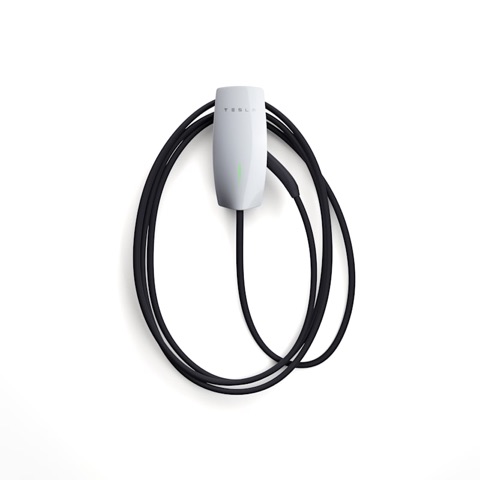
Image: Tesla Tesla Wall Connector (Gen 3) 1529455 series · LTA type-approved1
7.4 kW single-phase (32 A); 11 kW three-phase (16 A)
Tesla app over Wi-Fi: scheduling, charging history, access control (any EV or Tesla only), power sharing between two units; 48-month residential warranty
$790 unit; installation $1,500–$3,500 for a standard job up to 30 m 6,7,8,10
Prices are as published by the seller in October 2026 and change often; get a quote after a site
survey. Retailer listings (sources 14 and 15) are used only to match LTA’s
model numbers to product names. LTA’s list also approves AC chargers from Siemens, Delta,
StarCharge, Lite-On and others; ask your installer about any model and search the full approved list.
Which charger for my car
Tesla
Tesla recommends its Wall Connector for home charging, installed by one of its Certified
Installers (Tesla lists four in Singapore).7
The Model 3’s onboard charger takes 11 kW, and Tesla says the Wall Connector adds up to 75 km of
range an hour on a three-phase supply, or about 50 km an hour on single-phase 32 A.9,6
Your car’s touchscreen shows its maximum charge rate.
BYD
We found no home charger sold, bundled or recommended by BYD Singapore. Its charging tie-up
is with a public charging operator, for discounted public charging.17
Any type-approved charger with a matching plug works. The Atto 3 charges at up to 6.6 kW on AC,16
so a 7.4 kW single-phase unit already runs it at full speed. For other BYD models, check the AC
rate on the spec sheet before paying for three-phase.
Tesla and BYD in one garage
A Wall Connector charges any EV when its access control is set to “All Vehicles”, and two Wall
Connectors can share one supply with power management.7
A brand-neutral charger such as Schneider, ABB, Wallbox or Autel works the same for both cars.
Hyundai, Kia, MG, BMW
In 2023 Hyundai’s distributor offered a 7.4 kW Schneider EVLink Home charger with free standard
installation to Hyundai drivers in private estates;18
ask the dealer whether it still runs. We found no current Singapore home-charger offer from Kia, MG
or BMW, though BMW Asia holds type approval for one charger model.1
Single-phase vs three-phase
A home AC charger can only deliver what the slowest of three things allows: your home’s electrical
supply, the charger, and the car’s onboard charger, which turns AC from the wall into DC for
the battery.9 Tesla’s figures for the Wall Connector show how the
supply sets the ceiling:6
Wall Connector output by circuit, and range added to a Tesla Model 3
Circuit breaker
Output
Model 3 range per hour
Three-phase 16 A
11 kW
75 km
Single-phase 32 A
7.4 kW
50 km
Single-phase 16 A
3.5 kW
25 km
Single-phase (7.4 kW) already runs any car whose onboard charger takes 7.4 kW or less,
such as the Atto 3, at full speed.
Three-phase (11 kW) only helps if your home already has a three-phase supply and your car
accepts 11 kW, like the Model 3.
22 kW chargers, such as the three-phase ABB, Wallbox and Autel versions, are faster only
for cars whose onboard charger takes 22 kW. A Model 3 still charges at 11 kW on one.
Your Licensed Electrical Worker (LEW) checks the supply and the distribution board at the site
survey, and tells you whether it can take a charger without an upgrade.
How installation works
Site survey and quote. The installer checks the supply, the distribution board and the
cable route. Tesla asks buyers to compare quotes from several Certified Installers.7
Pick a type-approved model. Check it is on LTA’s list (search it here); supplying an unapproved model is an
offence.2
Installation by a Licensed Electrical Worker. A fixed charger must be installed under an
LEW to TR 25. A standard job usually takes a day, and Tesla advises booking about two weeks
ahead.4,7,6
Certification by an equipment specialist. An LTA-certified EV charger equipment specialist
checks the installation and issues a Certificate of Fitness.4
Register with LTA before first use. Register on OneMotoring with the Certificate of
Fitness, and fix the registration mark onto the charger within 60 days. The fee for a landed-home
charger below 23 kW is $375 until 31 March 2027.3,6
TR 25 is being replaced by Singapore Standard SS 722, in force from 1 April 2026 and mandatory
for new chargers from 1 October 2028. Chargers already type-approved under TR 25 do not need to be
re-certified.5
After installation: the 24-month inspection
Already have a home charger?
A registered charger at a landed home must be inspected by an LTA-certified equipment specialist
every 24 months, counted from the date on its Certificate of Fitness.3,4
EVolt carries out these inspections and issues the Certificate of Continued Fitness.
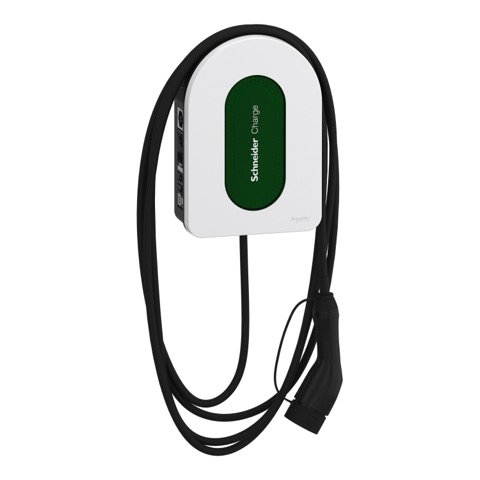
Only models on LTA’s list of type-approved EV chargers can be supplied in Singapore. For home wall chargers the list includes the Tesla Wall Connector, Schneider Charge, ABB Terra AC, Wallbox Pulsar Pro and Commander 2, and Autel MaxiCharger AC, among others. Each approved charger carries a label whose type approval ID you can check on OneMotoring.
How much does it cost to install a home EV charger at a landed house in Singapore?
Tesla sells the Wall Connector for $790 and says a standard installation by a Certified Installer costs $1,500 to $3,500, for cable runs up to 30 m. Installers advertise Schneider bundles with installation from $2,599 and an ABB bundle at $2,299. LTA’s registration fee for a landed-home charger below 23 kW is $375 until 31 March 2027. Long cable runs, a new or upgraded electrical panel, trenching or a pedestal cost extra.
Do I need a three-phase supply to charge an EV at home?
No. A single-phase 32 A circuit gives 7.4 kW, which adds about 50 km of range an hour to a Tesla Model 3. A three-phase 16 A circuit gives 11 kW, but only if the car’s onboard charger accepts 11 kW. A 22 kW charger is faster only for cars whose onboard charger takes 22 kW.
Can I charge a BYD with a Tesla Wall Connector?
Yes. Tesla says the Wall Connector can charge other electric vehicles, and its access control can be set to allow all vehicles. Charging speed is limited by the car’s onboard charger; the BYD Atto 3 charges at up to 6.6 kW on AC.
Does BYD Singapore sell or recommend a home charger?
We could not find a home wall charger sold, bundled or recommended by BYD Singapore. BYD’s charging partnership in Singapore is with a public charging operator, for discounted public charging. Any LTA type-approved AC charger whose plug matches the car’s inlet works with a BYD.
Does a home EV charger need to be registered and inspected?
Yes. After installation an LTA-certified equipment specialist issues a Certificate of Fitness, and the charger must be registered with LTA before it is used. A charger at a landed home must then be inspected by an equipment specialist every 24 months.
Does SS 722 replace TR 25 for home chargers?
SS 722 replaced TR 25 as Singapore’s EV charging standard on 1 April 2026, and becomes mandatory for new chargers after a two-and-a-half-year transition, from 1 October 2028. Chargers already type-approved under TR 25 do not need to be re-certified.
Compiled from LTA’s published list and the sellers’ own pages as of October 2026. EVolt does not sell
or install chargers and is not paid by any brand or installer listed here, and is not affiliated with
or endorsed by LTA.